Build in Public: How to Turn Your Private Notes Into Content That Grows Your Startup

The Compass Team
March 8, 2026 · Updated September 2, 2026
Pieter Levels built a multi-million dollar business while tweeting about it in real time. Justin Welsh turned his founder journey into a personal brand that generates millions. Sahil Lavingia's essay about Gumroad's failure became one of the most-read startup posts ever written.
They all did the same thing: they shared their real thinking, publicly.
Building in public works. It builds trust, attracts customers, recruits talent, and opens doors you didn't know existed. Most founders know this. The problem isn't motivation. It's execution.
You sit down to write a tweet. You stare at the blank screen. You think, "What do people want to hear?" You draft something generic. You delete it. You go back to work.
Sound familiar?
You have plenty to say. You're just looking in the wrong place for content.
Your Best Content Already Exists (In Your Notes)
Here's what most founders miss about building in public: the content is something you extract.
Every day, you're already making decisions, learning lessons, and having insights. You just aren't capturing them in a way that makes them shareable.
That Slack message to your cofounder about why you changed your pricing? That's a LinkedIn post.
The voice memo about why a customer call went sideways? That's a Twitter thread.
The late-night note about questioning your entire go-to-market strategy? That's the kind of authentic, vulnerable content that resonates with thousands of other founders going through the same thing.
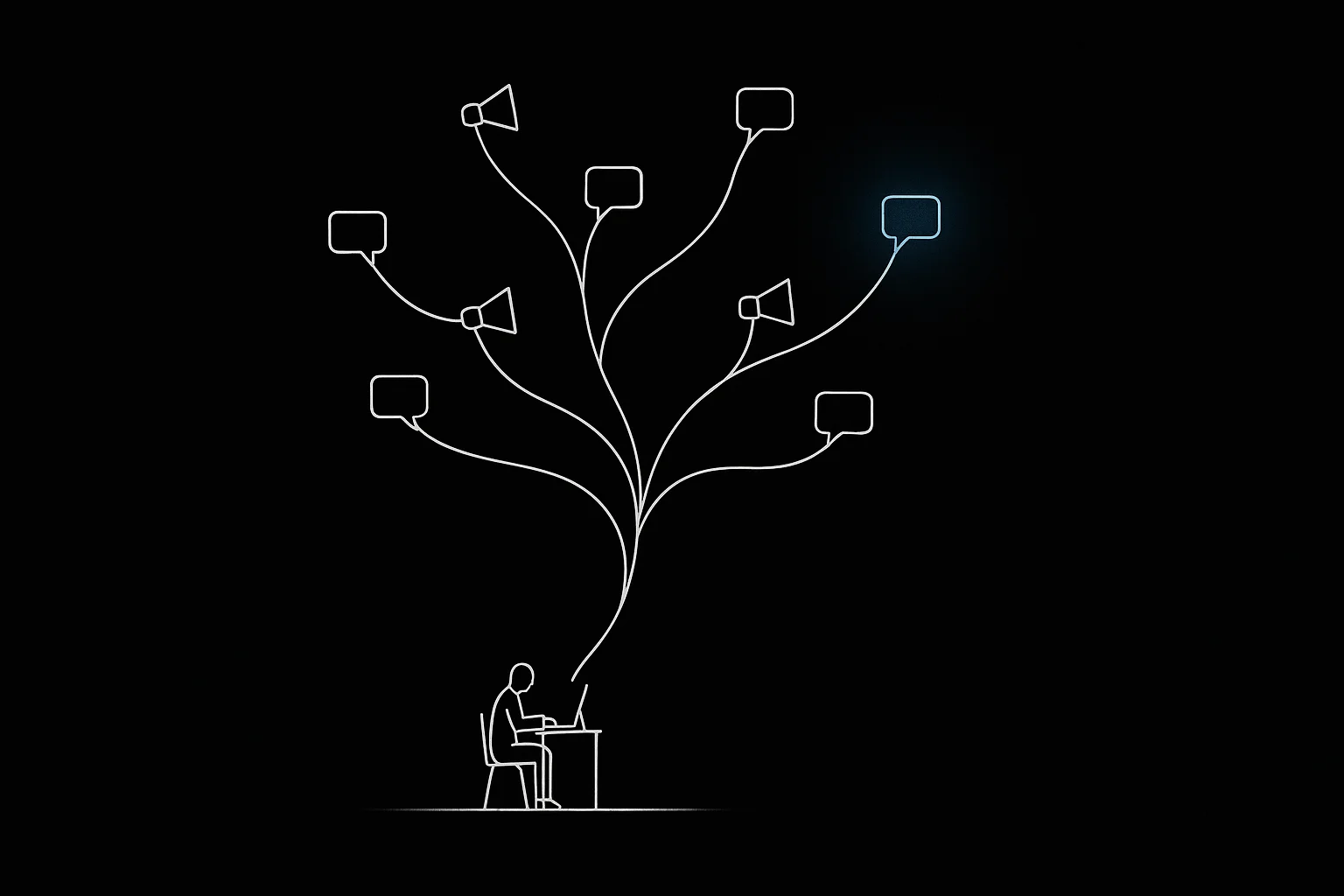
Build-in-public content is excavated from the thinking you're already doing.
The BIP Framework: What to Share vs. What to Keep Private
Not everything belongs in public. The founders who do BIP well have a clear mental model for what crosses the line:
Share Freely
- Decisions and the reasoning behind them. "We chose X over Y because..." This is the most valuable BIP content. People learn from your reasoning, not your results.
- Lessons learned the hard way. Failure stories with takeaways are gold. They're authentic, they're useful, and they're rare because most founders are too embarrassed to share them.
- Metrics you're comfortable with. Growth rates, conversion improvements, milestone celebrations. Numbers give your narrative credibility.
- Your process and frameworks. How you prioritize features. How you run user interviews. How you structure your week. Process content is endlessly shareable because people can immediately apply it.
Keep Private
- Customer-specific details. Never share information that could identify a customer without permission.
- Team dynamics and internal conflicts. Your cofounder drama is not content. It's a conversation to have privately.
- Specific financial details you're not comfortable with. Revenue is fine if you want to share. Runway and burn rate are more nuanced.
- Ideas you haven't validated. Sharing half-baked ideas invites noise. Share decisions you've already made, not decisions you're still making.
The Gray Zone
- Struggles and doubts. These are the most powerful BIP content, but timing matters. Share them with some distance. "Last month I almost pivoted, here's why I didn't" hits different than "I don't know what I'm doing" in real time.
A Practical System for BIP Content
The founders who are consistent with BIP content all have a system. Here's one that works:
Step 1: Capture Everything, Worry About Publishing Later
Your daily notes are the raw material. Every observation, every decision, every doubt. Capture them in the moment. 15 seconds, raw, unedited.
You're not creating content here. You're just writing your thinking down instead of letting it evaporate.
Step 2: Weekly Review, Mine for Gold
Once a week, spend 20 minutes reading through your notes. Look for:
- Decisions you made. Why did you choose one path over another?
- Patterns you notice. Did the same concern come up multiple times?
- Surprises. What happened that you didn't expect?
- Lessons. What do you know now that you didn't know Monday?
Mark 2-3 notes that have potential as public content.
Step 3: Expand, Don't Create
Take those marked notes and expand them. Not from scratch; from the raw thought you already captured.
Your note: "3 users asked for integrations this week. Starting to think this is a real need, not noise."
Your tweet: "3 different users asked for the same feature this week. Here's how I'm deciding whether it's a real need or sampling bias: [thread]"
The hard part (having the insight) is already done. You're just formatting it for an audience.
Step 4: One Tap to Publish
The gap between "I should post this" and actually posting it is where most BIP intentions die. The smaller that gap, the more consistent you'll be.
This is where having the right tool matters. Imagine your daily reflection becoming a polished tweet with one tap, not because AI wrote it for you, but because your authentic thinking was the starting point, and the tool just helped you format it for the right platform.
Compass does this. Your private notes become the foundation. AI helps you shape them into content that sounds like you, because it literally came from you.
If you're currently using Notion or ChatGPT to draft your BIP content from scratch, you're doing it backwards. The raw material should come from your actual thinking, not a blank prompt window.
Why Authenticity Beats Polish
The highest-performing BIP content isn't the most polished. It's the most real.
Pieter Levels doesn't write essays. He tweets raw observations. "@levelsio: Just hit $100k MRR. Was making $0 two years ago. Consistency > strategy."
That works because it's clearly authentic. It came from a real moment, a real milestone, a real human behind the keyboard.
When you extract content from your actual notes (your real decisions, real doubts, real lessons) it carries that same authenticity. Readers can tell the difference between content that was lived and content that was manufactured.
The Compound Effect of Consistent BIP
Here's what most founders underestimate: the compound effect of consistent public sharing.
Month 1: Nobody reads your posts. That's fine.
Month 3: A few founders start engaging. You build a small group of people following your journey.
Month 6: A potential customer finds you through a post. An investor reaches out because they've been watching your progress.
Month 12: You have a built-in audience for every launch, every feature, every milestone.
Building in public is the only marketing strategy that gets easier over time. Every post adds to your archive. Every insight builds your credibility. Every vulnerable share deepens trust.
The founders who win at BIP aren't the best writers. They're the most consistent. And consistency comes from having a system, not willpower.
Start Today: The 15-Second Challenge
Here's your challenge: for the next 7 days, capture one founder thought per day. Just one. 15 seconds. It doesn't need to be brilliant. It just needs to be real.
At the end of the week, read them all. I guarantee at least 2 of them could be expanded into content that would resonate with other founders.
That's all BIP is. Real thoughts. Captured consistently. Shared intentionally.
If you've been trying to build your journaling system separately from your content pipeline, you're doing double work. The best BIP content starts as private reflection.
Compass turns your daily reflections into authentic, shareable content, because the best content isn't something you create from scratch. It's the thinking you're already doing, made visible.
Turn your private notes into public content with one tap. Try Compass →
Share this article